Call the AI Yourself
About 78% of customers go with the business that answers first, so the season goes to whoever picks up. (Industry research, directional)
Spring fills the phone. Summer fills the trucks. Miss a ring and the neighbour books someone else. ItsBot is a landscaping answering service that quotes the job, books the visit, and turns one-off cuts into recurring routes.


Priced from the property details on the call

One-off and recurring booked

Estimates reactivated before the season turns

Why It Matters
Landscaping is time-boxed in a way almost no other trade is. You have a window, the window is the year's revenue, and you spend the whole of it holding a machine that makes it impossible to hear a phone.
So the call goes to voicemail. You ring back at seven that evening. They do not pick up. They ring you at eleven the next morning, when you are on a mower. Three days later somebody else has quoted them and cut the grass.
That is not a lost call. That is a lost customer, and in this trade a customer is not one cut. It is thirty cuts a year, for six years.
About 78% of customers go with the business that answers first, so the season goes to whoever picks up. (Industry research, directional)

Around 85% of people who cannot reach a person never call back. (Industry research, directional)

The Quote
Quotes by property size is easy to claim. Here is how it actually works, because an AI cannot look at a garden.
It does not need to. It asks the questions that determine the price, and it asks all of them, every time, which is more than most people manage when the phone rings mid-job.
Then it does one of two things. If your rate card covers it, it quotes on the call and books the work there and then. If it does not, it says so honestly and books the site visit, with every detail already captured so your estimator is not starting from a postcode and a first name.
Either way, nobody is playing voicemail tennis for three days.
The address:
Which is the single most useful thing anyone can give you, because you can look at it.
Roughly how big:
Front, side, back garden, whether it is a corner plot. Most people can describe their own lot.
What the job actually is:
Just the lawn, or beds and edges too. Hedges. Leaves. Full tidy-up.
Access:
Is there a gate, how wide, can a machine get through, is it a side alley or straight through the house.
Obstacles:
Slopes, steps, a trampoline, raised beds, a pond.
The dog:
Genuinely. It decides whether you can work.
How often:
Weekly, fortnightly, one-off, or "just this once" (which is where the contract conversation starts).
The Contract
The customer calls asking for one cut. They almost always do, because they are thinking about this weekend and the grass that has got away from them.
What they are not thinking about is that they will need it done again in a fortnight, and again, and again, and that they would rather it just happened without them having to ring anyone. That is the sale, and it is worth thirty times the call they made.
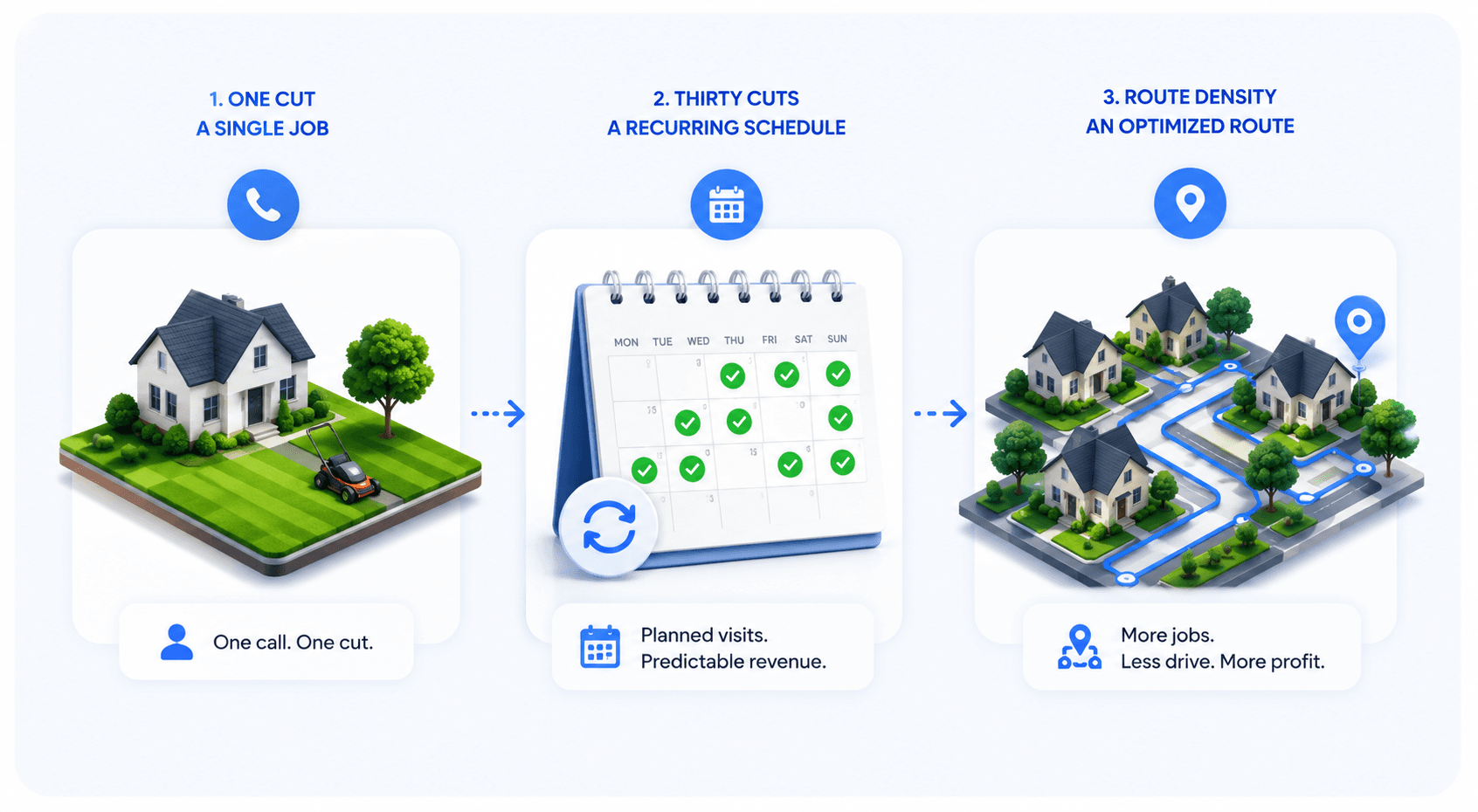
Nobody pitches it, because your office manager is you, and you are on a mower.
ItsBot offers it at the moment the customer is already saying yes. It knows your packages, it knows what a fortnightly plan costs against six one-offs, and it explains it without pressure. It also knows who is already on a plan and does not pitch them.
Route density is the whole economics of this trade. Four contracts on one street is a profitable Tuesday. Four one-offs across a county is a day spent driving. The phone is where that gets decided.
The Rush
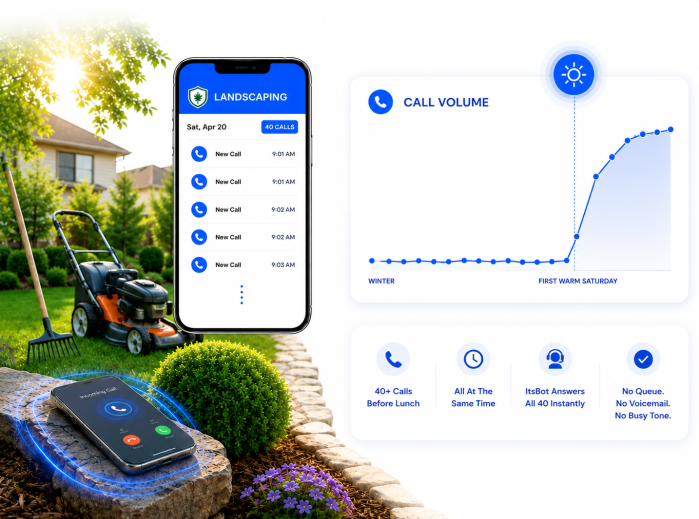
Every landscaper knows the day. It hits about eighteen degrees, the sun is out, everybody in the country walks into their garden at the same moment, and the phone does not stop.
Forty calls before lunch, from people who have all decided simultaneously that this is the year they sort the garden out. You cannot answer them. You are on the first job of the season, and every unanswered ring is somebody scrolling to the next name.
ItsBot answers all forty. At once. No queue, no voicemail, no busy tone. The same thing happens after a storm, when a fence is down and a branch is across a drive and everybody rings at nine on a Monday.
The days you are least able to answer the phone are the days the phone matters most. That is the whole product.
The Playbook
Regular lawn maintenance
Size, access, frequency, dog, obstacles.
Quotes from your rate card. Books. Offers the contract.
One-off tidy-up, garden has got away from them
How long since it was cut. How high. Any waste to remove.
Prices the clearance separately from the maintenance. Books, then offers the plan.
Hedges, trees, anything with height
How high. How close to a boundary or a road. Any power lines.
Flags what needs equipment, access, or a specialist. Books a survey rather than quoting blind.
Storm damage, branch down, fence over
Is anything blocking a road, a drive, or a doorway. Is anything on a car or a roof.
Prioritises. Escalates the genuinely urgent under your rules.
Work you do not do
Whatever it is.
Declines politely, on the call. Does not book a site visit for a job you were never going to take.
Illustrative. Your rate card, your services, your minimum job value, your rules. Set once on setup.
That last row is worth more than it looks. Landscapers get asked about tree surgery, stump grinding, fencing, hardscaping, decking, and snow, and half of it you do not do. Every one of those that turns into a site visit is an hour and a tank of diesel spent on a job you were always going to turn down.
The Follow-Up
Landscaping is the most seasonal trade on this site, which means it is also the easiest to reactivate, and almost nobody does it.
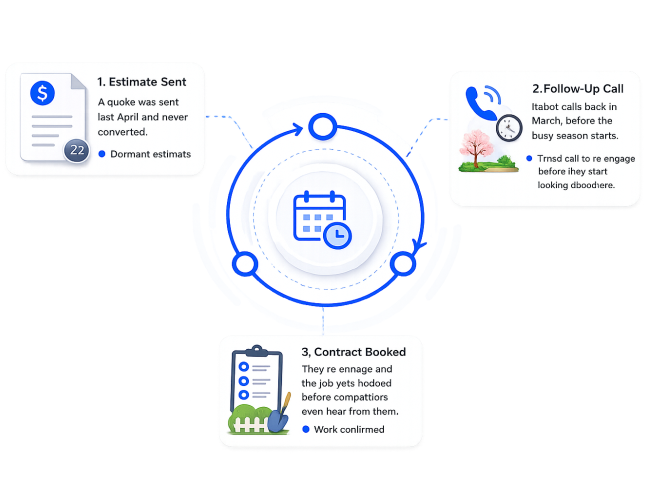
The ItsBot Estimate Follow-Up chases the quote you sent nine days ago, at 24 hours and again at 72. Then it goes further back. The estimate from last April that never converted. The customer who had a contract two seasons ago and quietly stopped. The one-off from last autumn who has not called since.
It calls them in March, before the first warm Saturday, when they have not yet started Googling and you are not yet booked out.
Those people already wanted their garden done and already had a number from you. Calling them back costs nothing and it is the only kind of lead generation in this trade that does not involve a leaflet.
Hear It
Incoming Call
New landscaping inquiry
Property Details Captured
Size, services, location
Estimate Scheduled
Quote prepared and sent
Booked
Job scheduled

No New Tool
ItsBot is not landscaping scheduling software and is not trying to replace yours. It is the layer in front of it: it answers, qualifies, prices, and writes the job into the system you already run, with the address, the access notes, the obstacles, and the frequency already filled in. Every caller lands in your CRM whether they booked or not.
See Integrations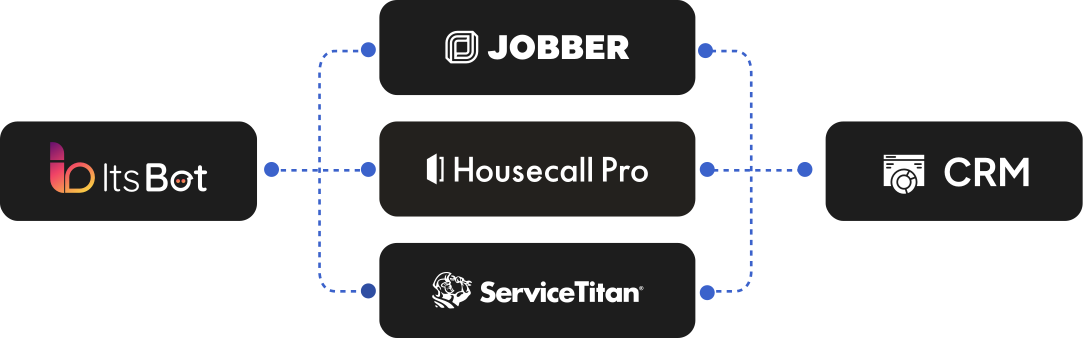
Your AI Front Office

Quotes the yard, books the visit, and writes the job into your software.

Takes evening and weekend calls when storm cleanups and spring enquiries pile up.

Chases quiet quotes and offers recurring routes until the season stays full.
Same three agents that run the front office dispatcher by day, after-hours at night, follow-up until the route is booked.
Proof
Call the demo line and hear the landscaping Voice Agent quote a yard, book the visit, and offer a recurring route — no slide deck required.
Spring used to mean missed calls and empty slots by June. Now every enquiry gets quoted, booked, and turned into a recurring route.
Landscape Company Owner
Regional lawncare firm
FAQ
As an answering service for landscapers, ItsBot answers your calls and also quotes by property size, books jobs, and reactivates old estimates.